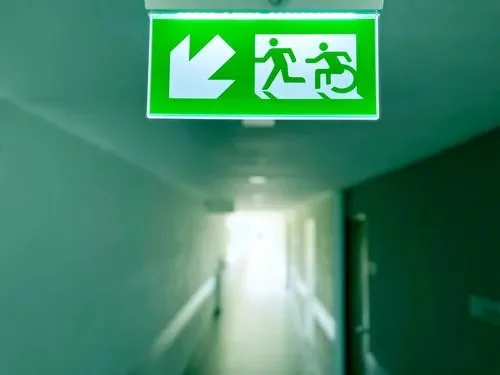
Yes, most businesses need emergency lighting if people would struggle to safely find and use an escape route when the normal lighting fails. The exact requirements depend on your premises, its layout and the findings of your fire risk assessment. Emergency lighting may be needed along escape routes, near exits, on stairs and in other areas where sudden darkness could put people at risk.
It’s not simply a precaution for large buildings. Offices, shops, warehouses and smaller commercial premises may all require emergency lighting.
Is Emergency Lighting a Legal Requirement for Businesses?
The Regulatory Reform (Fire Safety) Order 2005 applies to virtually all workplaces in England and Wales.
Under the legislation, emergency routes and exits that require illumination must have emergency lighting of adequate intensity if their normal lighting fails.
Your business should also have a fire risk assessment. This is where the specific requirements for your building should be identified.
GOV.UK guidance states that workplace fire safety and evacuation plans should provide emergency lighting where needed, alongside clear escape routes and suitable exits.
So, the answer isn’t that every commercial building needs exactly the same number or type of fittings. Your system needs to be appropriate for the risks within your premises.
Where Does a Business Need Emergency Lighting?
The purpose of emergency lighting is to help people reach safety if mains lighting cuts out.
Common locations include:
- Corridors forming part of an escape route
- Staircases and changes in floor level
- Final exit doors
- Intersections and changes in direction
- Windowless rooms or internal areas
- Areas near firefighting equipment
- Fire alarm call points
- Electrical distribution equipment
- Larger open areas where occupants could become disorientated
A properly designed system takes your actual building layout into account. Adding a few illuminated exit signs without assessing the escape routes isn’t enough.
The current British Standard, BS 5266-1:2025, provides guidance for the design, installation and operation of emergency lighting systems.
Experienced emergency lighting installers in Essex can assess your premises and determine where fittings need to be positioned.
What Types of Businesses Need Emergency Lighting?
Emergency lighting can be required across almost every part of the commercial and public sector.
This includes:
- Offices
- Shops and retail premises
- Warehouses
- Industrial units
- Restaurants and pubs
- Hotels
- Schools and nurseries
- Healthcare premises
- Leisure facilities
- Community and public buildings
The size of the business isn’t the only factor.
Imagine a small office above a shop. It might only employ a handful of people, but if the escape route involves an internal staircase with no natural light, losing the mains supply could make evacuation difficult.
That risk can create a clear need for emergency lighting.
Does My Business Need Emergency Lighting During Daylight Hours?
Potentially, yes.
It’s easy to assume emergency lights only matter at night, but many commercial buildings contain areas with little or no natural light.
Internal corridors, toilets, stockrooms and stairwells can become dark immediately if the normal lighting fails, even at midday.
Your fire risk assessment should consider what would happen throughout the building if there were a complete lighting failure.
How Does Emergency Lighting Work?
Most emergency fittings contain a battery that provides power when the normal electricity supply fails.
There are two common approaches.
Maintained Emergency Lighting
Maintained fittings operate during normal use and remain illuminated if the mains electricity fails.
You’ll often see this type in public buildings and premises where occupants may not know the layout.
Non-Maintained Emergency Lighting
Non-maintained fittings normally remain off and switch on automatically if the usual lighting supply fails.
These are common in offices, warehouses and other workplaces.
Emergency lighting can also form part of a wider commercial lighting system, particularly when a business is refurbishing its premises or upgrading old lighting to LED.
Who Is Responsible for Emergency Lighting?
The Fire Safety Order places duties on the responsible person for the premises.
Depending on the business, this could be an employer, building owner, landlord, occupier or another person who has control over the property.
Some buildings have more than one responsible person. A landlord might manage communal areas while individual tenants have responsibilities within their own units.
The important thing is to establish responsibility rather than assume somebody else is taking care of it.
Does Emergency Lighting Need to Be Tested?
Yes. Installing emergency lights is only part of the job. They need to work when the mains power fails.
Emergency lighting systems should have routine functional checks and periodic testing, with problems dealt with when identified.
Keeping records of inspections, testing and repairs also makes it easier to demonstrate that the system has been maintained.
Batteries and fittings can deteriorate with age, so a system that worked perfectly several years ago shouldn’t automatically be assumed to remain suitable today.
What If My Business Doesn’t Have Emergency Lighting?
If your fire risk assessment shows emergency lighting is necessary, failing to provide suitable coverage could leave occupants at risk and put the business in breach of its fire safety duties.
There’s also a practical issue. A power failure during an emergency can turn familiar corridors and staircases into difficult escape routes within seconds.
If you’ve moved into a new property, changed its layout or inherited an older electrical system, it’s worth having the existing provision assessed rather than guessing.
Our Essex-based commercial electricians can inspect the electrical installation and identify where upgrades are required.
Frequently Asked Questions
Does a small business need emergency lighting?
It can. Building size alone doesn’t determine the requirement. Your escape routes, natural light, layout and fire risk assessment all need to be considered.
Do all fire exit signs need emergency lighting?
Where an exit sign needs to remain visible during a lighting failure, suitable emergency illumination will be required. The correct setup depends on the building and its escape strategy.
How long should emergency lighting stay on?
The required duration depends on the type and use of the premises. Many commercial systems are designed for a three-hour duration, but your system should be specified for the individual building rather than relying on a general rule.
Can emergency lighting be added to an existing building?
Yes. Existing commercial premises can have new emergency lighting installed or outdated systems upgraded. A site assessment will show what work is needed.
Should I review emergency lighting after refurbishing my premises?
Yes. Moving walls, changing escape routes or altering how rooms are used can affect the suitability of an existing system. Emergency lighting should form part of the wider fire safety review after significant changes.
Final Thoughts
Most businesses need some form of emergency lighting, but getting it right means looking at the building rather than simply counting fittings.
A good system gives staff and visitors a clear route to safety when normal lighting fails. It should suit the premises, reflect your fire risk assessment and be maintained so it is ready when needed.
If you’re unsure whether your current system provides enough coverage, SB Electrical Solutions can help. Our emergency lighting installers in Essex work with businesses throughout the area to assess, install and maintain dependable systems. Contact SB Electrical Solutions to discuss your premises and arrange an assessment.