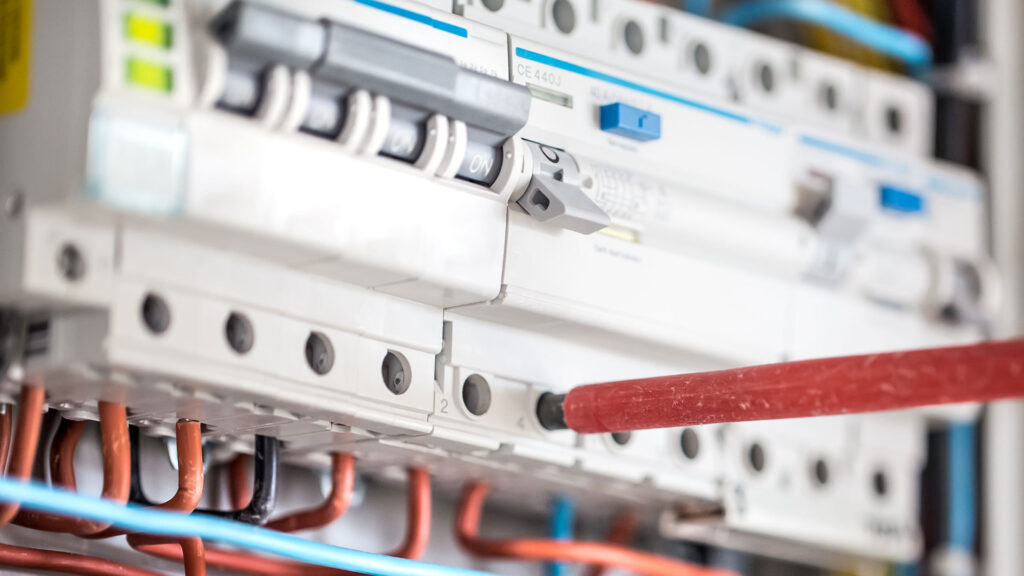
Before moving into new business premises, it’s worth checking the electrical installation, power capacity, lighting, emergency systems and socket layout before staff or equipment arrive. An electrical inspection can uncover faults or outdated equipment, while early planning gives you time to make upgrades without disrupting day to day operations. It’s also the right moment to think about future requirements, such as additional machinery, EV chargers or higher electrical demand.
Getting this work done before move-in day is normally much simpler than trying to make changes once the building is full of desks, stock and people.
Start With the Existing Electrical Installation
Before committing expensive equipment to a new premises, establish the condition of the electrical installation.
An Electrical Installation Condition Report provides a detailed assessment of fixed wiring, distribution boards, sockets, circuits and protective devices. Professional EICR testing can identify damage, deterioration or electrical safety issues that may need attention.
This is particularly useful when taking over an older property or a unit previously used by a different type of business. An installation that worked perfectly well for a small office may not be suitable for a workshop full of power hungry equipment.
Under the Electricity at Work Regulations 1989, electrical systems used at work must be maintained so far as necessary to prevent danger. Starting with a clear picture of the installation makes ongoing maintenance much easier.
Check That the Electrical Supply Can Handle Your Business
Your premises may have enough sockets, but that doesn’t necessarily mean the electrical supply can support what you plan to connect to them.
Think about the equipment your business will use each day. Air conditioning, commercial kitchens, machinery, servers and EV chargers can all create substantial demand.
An electrician can assess the existing supply, distribution boards and circuits to see whether upgrades are required.
Planning this before moving in can prevent overloaded circuits and avoids discovering too late that expensive new equipment needs additional electrical work.
Plan Your Socket and Power Layout
A badly positioned socket can become surprisingly irritating once a business is operational.
Before furniture and equipment go in, decide where desks, machinery, displays and other electrical equipment will sit. This allows sockets and dedicated circuits to be installed where they’re actually needed.
Extension leads shouldn’t become a permanent solution to poor planning.
Larger appliances or specialist equipment may also require their own circuits. Working with a commercial electrician in Essex before the move allows these requirements to be built into the installation properly.
Review the Commercial Lighting
Lighting has a major effect on both energy use and how comfortable the premises are to work in.
Older buildings may still contain fluorescent fittings or poorly positioned lighting that leaves workspaces unevenly illuminated. Moving premises is a good opportunity to review the whole setup.
Modern LED commercial lighting can reduce electricity use and maintenance requirements. Lighting controls such as occupancy sensors can cut waste further in meeting rooms, corridors and storage areas that aren’t constantly occupied.
Think about how each area will actually be used. A warehouse aisle needs different lighting from an office workstation or customer facing showroom.
Check Your Emergency Lighting
Emergency lighting helps people leave the building safely if the normal lighting supply fails.
Your fire risk assessment should identify where emergency lighting is required. Common locations include escape routes, staircases, final exits and areas without adequate natural light.
GOV.UK guidance states that businesses must provide emergency lighting where it is needed as part of their fire safety and evacuation arrangements.
If you’re taking over existing premises, don’t assume the current system is suitable simply because the fittings are there. The layout or use of the property may have changed since it was installed.
Emergency lighting should also be tested and maintained after you move in.
Think About Data, Security and Specialist Systems
Electrical planning isn’t limited to sockets and lights.
Depending on your business, you may also need power supplies for:
- CCTV systems
- Access control
- Fire alarms
- Data cabinets and servers
- Intruder alarms
- Air conditioning
- External signage
- Specialist machinery
Planning these systems together can reduce duplicated work and avoid running new cabling through freshly decorated areas a few weeks after moving in.
If you’re refurbishing the property, arrange electrical work before final decorating wherever possible.
Consider Future Electrical Requirements
It’s worth planning for where your business is going, not just what it needs on opening day.
You may expect to add more employees, increase machinery capacity or electrify company vehicles. Installing spare capacity or allowing room for additional circuits now can make later expansion much easier.
The same applies to renewable technologies. Solar panels, battery storage and EV charging can all affect electrical infrastructure requirements.
You don’t necessarily need to install everything immediately. However, discussing future plans with your electrician can prevent today’s refurbishment from creating tomorrow’s limitations.
Who Is Responsible for Electrical Work in a Leased Premises?
If you’re renting commercial premises, check the lease before commissioning major electrical work.
The landlord may retain responsibility for parts of the installation, while the tenant may be responsible for equipment and electrical systems within their unit.
Never assume responsibility automatically falls to one party.
Get permission where necessary and agree who will pay for required upgrades before work begins. Keep copies of EICRs, installation certificates and other electrical documentation once the work is completed.
Frequently Asked Questions
Should I get an EICR before moving into commercial premises?
It is sensible to establish the condition of the fixed electrical installation before occupying a new business premises, particularly if recent inspection records aren’t available. An EICR identifies deterioration, defects and other electrical safety concerns.
Can electrical work be carried out before my lease starts?
That depends on your agreement with the landlord and when access is granted. Discuss planned alterations before signing the lease so responsibilities and permissions are clear.
Should I replace old fluorescent lighting before moving in?
If the existing lighting is inefficient or unsuitable, completing an LED upgrade while the building is empty can reduce disruption. It also gives you the opportunity to redesign the lighting around your proposed layout.
Do commercial premises need emergency lighting?
Emergency lighting is needed where occupants require illumination to escape safely if normal lighting fails. The requirements should be identified through the premises’ fire risk assessment.
When is the best time to arrange electrical work?
As early as possible. Electrical work is generally easier to complete before furniture, stock and employees occupy the building. Early planning also gives you time to deal with unexpected faults without delaying the move.
Final Thoughts
Moving premises is one of the best opportunities you’ll get to put the electrical installation in order.
Start by checking the condition and capacity of the existing system. Then look at the practical details, including power points, commercial lighting and emergency lighting. Finally, consider how your electrical requirements might change as the business grows.
Sorting these things before moving day means fewer surprises and less disruption later.
If you’re preparing to move into new commercial premises, contact SB Electrical Solutions to arrange an assessment. Our commercial electricians in Essex can inspect the existing installation, identify any work required and help get your new premises ready for business.