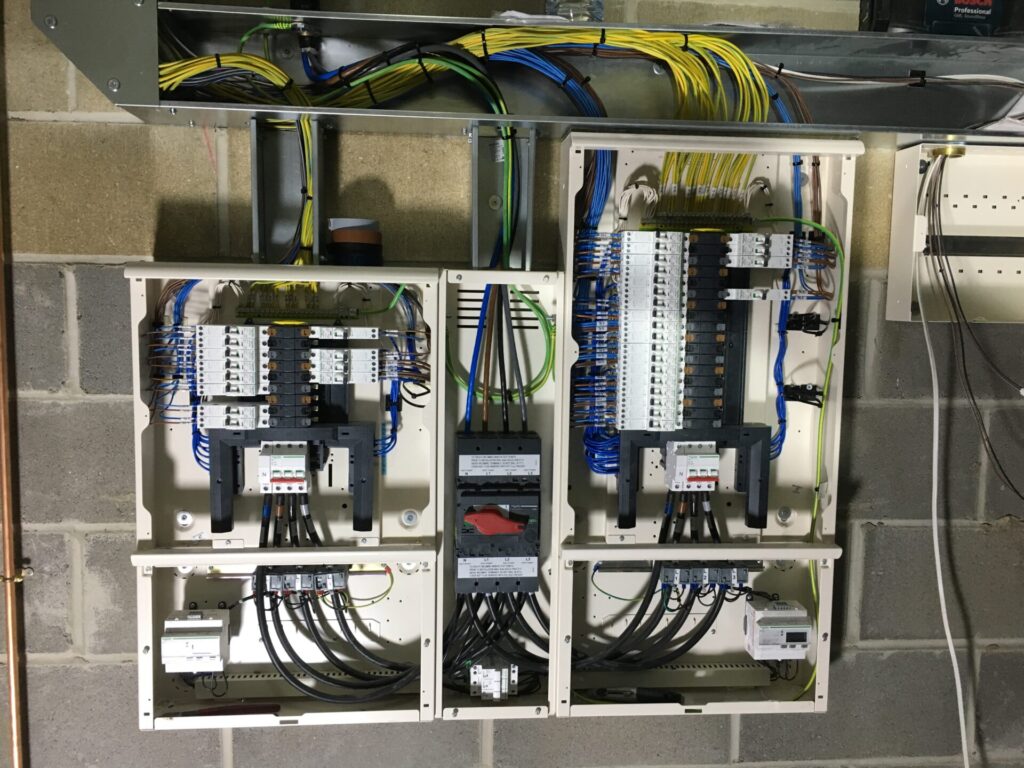
A commercial electrical inspection checks whether the fixed electrical installation in your premises is safe, serviceable and suitable for continued use. The electrician will inspect distribution boards, wiring, sockets, lighting circuits, earthing and protective devices, then carry out electrical tests to identify faults or deterioration. The findings are recorded in an Electrical Installation Condition Report, or EICR, with any problems clearly classified.
For business owners and facilities managers, knowing what happens beforehand makes it easier to plan the inspection and minimise disruption.
Why Do Commercial Properties Need Electrical Inspections?
Commercial electrical systems can take plenty of punishment. Equipment is added, layouts change and circuits may be used differently from when the installation was first designed.
Problems aren’t always obvious either. Loose connections, damaged insulation or inadequate protective measures can exist without causing an immediate failure.
The Electricity at Work Regulations 1989 require electrical systems used at work to be maintained so far as necessary to prevent danger. Regular inspection and testing is an established way to assess the condition of an installation and identify problems that need attention.
Professional EICR testing gives you a documented assessment rather than relying on assumptions about the condition of the electrics.
What Happens Before the Inspection Starts?
A good commercial inspection starts with planning.
The electrician will usually discuss how the premises operate, any known electrical issues and which areas can be accessed. Previous EICRs, electrical certificates and circuit schedules can also provide useful information.
For an occupied workplace, it’s important to identify equipment that can’t simply be switched off. Servers, machinery, refrigeration and other essential systems may need extra planning before circuits can be isolated.
This helps the electrician organise testing around the business instead of causing unnecessary disruption.
What Does the Electrician Visually Inspect?
The first stage generally involves checking the visible condition of the fixed installation.
This may include:
- Distribution boards
- Fixed wiring
- Sockets and switches
- Lighting circuits
- Earthing and bonding
- Protective devices
- Electrical accessories
- Signs of overheating or damage
- Circuit identification and labelling
The electrician will look for deterioration, unsuitable alterations and anything that could create a risk of electric shock, fire or equipment damage.
An inspection can also pick up evidence of previous electrical work that wasn’t completed to the expected standard.
What Electrical Tests Are Carried Out?
Visual checks only tell part of the story. The electrician also needs to test the electrical installation.
Earthing and Bonding
Earthing and bonding help prevent dangerous voltages developing on exposed metalwork if an electrical fault occurs.
The inspection checks that these protective measures are present and suitable.
Circuit Continuity
Continuity testing confirms that conductors have an effective electrical path through the circuit.
This is particularly important for protective conductors that need to carry fault current safely.
Insulation Resistance
Insulation resistance testing helps identify damaged or deteriorating insulation around electrical conductors.
Poor insulation can increase the risk of electrical faults and, in some circumstances, fire.
RCD Testing
Residual Current Devices, commonly known as RCDs, provide additional protection by disconnecting the electricity supply when certain faults occur.
Where they are installed, the electrician will check that they operate as required.
Other Circuit Tests
Further testing can assess factors such as polarity, fault loop impedance and the suitability of protective devices.
The exact tests depend on the installation and the extent of the inspection.
Will the Electricity Need to Be Turned Off?
Yes, some circuits will normally need to be isolated during a commercial electrical inspection.
That doesn’t necessarily mean the entire building will lose power at the same time. In larger premises, testing can often be planned section by section.
This is one reason commercial inspections should be arranged in advance. The electrician and business can agree a sensible schedule, particularly where critical equipment needs to remain operational.
For more complex sites, working with a contractor experienced in commercial electrical services can make the process much smoother.
What Happens When a Problem Is Found?
Issues identified during an EICR are given classification codes according to their severity.
C1: Danger Present
A C1 observation means there is an immediate danger. Action is required straight away to remove the risk.
C2: Potentially Dangerous
A C2 means the issue isn’t presenting immediate danger at that moment, but it could become dangerous. Urgent remedial work is required.
C3: Improvement Recommended
A C3 indicates that an improvement is recommended. It doesn’t make the EICR unsatisfactory by itself.
FI: Further Investigation Required
FI means the electrician has identified an issue that requires further investigation without delay before its safety can be properly assessed.
A report containing C1, C2 or FI observations will normally be classed as unsatisfactory.
That doesn’t mean the whole electrical installation needs replacing. Often, specific faults can be repaired and the relevant parts retested.
How Long Does a Commercial Electrical Inspection Take?
There isn’t a standard time for every property.
A small office or retail unit may take several hours. A large warehouse, school or industrial premises with numerous distribution boards and circuits could take considerably longer.
Factors affecting the timescale include:
- Size of the property
- Number of circuits
- Age and condition of the installation
- Accessibility
- Quality of existing circuit records
- Restrictions on switching equipment off
The electrician should discuss the likely scope before starting so you can plan around the inspection.
What Happens After the Inspection?
Once the inspection and testing are complete, you’ll receive an Electrical Installation Condition Report.
The report sets out the condition of the installation, any observations found and the recommended date for the next inspection.
If the result is satisfactory, there may still be C3 recommendations worth considering as part of future maintenance.
If it’s unsatisfactory, the report will identify the issues requiring remedial work. Once those faults have been corrected, appropriate certification or confirmation of the completed work should be retained alongside the original EICR.
Keeping these records together creates a useful history of the electrical installation and makes future inspections easier.
How Can a Business Prepare for an Electrical Inspection?
A small amount of preparation saves time.
Give the electrician access to electrical cupboards, distribution boards and relevant areas of the property. Gather previous certificates and EICRs if they’re available.
It’s also worth checking with department managers before the inspection. If shutting down a particular circuit would interrupt important equipment or customer activity, flag it beforehand.
The aim isn’t to make the workplace fit around the inspection. Good planning lets the inspection fit around the workplace.
Frequently Asked Questions
Is a commercial electrical inspection the same as an EICR?
An EICR is the report produced following periodic inspection and testing of the fixed electrical installation. People often use “commercial electrical inspection” and “commercial EICR” to describe the same process.
Is an EICR legally required for commercial premises?
There isn’t one law stating that every commercial property must have an EICR at a fixed interval. However, the Electricity at Work Regulations require electrical systems to be maintained so far as necessary to prevent danger. Periodic inspection and testing is a recognised method of assessing their safety.
How often should a commercial EICR be carried out?
The interval depends on the type of premises, the condition of the installation and how it is used. Many commercial installations are inspected periodically at intervals recommended by the electrician, with higher risk environments requiring more frequent attention.
Does an EICR include portable appliances?
No. An EICR focuses on the fixed electrical installation. Inspection and testing of portable appliances is a separate process.
Can a business stay open during an EICR?
Often, yes. Testing can frequently be planned around business operations, although individual circuits will need to be isolated at certain points.
Final Thoughts
A commercial electrical inspection isn’t simply a paperwork exercise. It gives you a clear view of the condition of the electrical system your business relies on every day.
The electrician will inspect and test the installation, identify any safety concerns and provide an EICR explaining what needs attention. Planning the work properly can also keep disruption to a minimum.
If your commercial premises are due an inspection, contact SB Electrical Solutions to arrange EICR testing. Our team provides reliable commercial electrical services across Essex and can also complete any remedial work identified during the inspection.
The compliance wording is grounded in Regulation 4 of the Electricity at Work Regulations 1989, which requires electrical systems to be maintained as necessary to prevent danger. Legislation.gov.uk Electrical Safety First also provides current guidance on the C1, C2, C3 and FI classification codes used in EICRs. electricalsafetyfirst.org.uk